The Boys in the Light
The Boys in the Light follows the parallel stories of the author's father, Eddie Willner, and the horrors he faced during the Holocaust and key members of Company D, 32 Regiment, 3rd Armored Division, the group of Americans who found Eddie shortly after his escape from five years in captivity. It begins at the end, so to speak—we know these two stories will eventually merge into one—but the first two-thirds of the book traces the paths each storyline took until their advertised intersection.
Willner spent her upbringing hearing tales of her father's ordeals during World War II. From his upbringing in Mönchengladbach, to fleeing in 1938, before eventually being captured in May of 1940, Willner had heard about the atrocities he endured at the hands of the Nazis. She captures those experiences faithfully; it's difficult to read as someone with no direct connection to those involved; it had to be unbearable to write as the daughter of the man—just a boy at the time—who was subjected and witness to such unspeakable crimes.
But even more often than the stories of his time in Auschwitz and other camps, Eddie Willner shared stories about the American soldiers that had stumbled upon him shortly after he managed to escape from his captors.
"My five siblings and I were raised with the stories told dozens of times about what these men had done for my father, Eddie, and for his best friend, Mike, after the trauma they had endured at such a young age. Though my father told us they were just 'ordinary Americans,' to us kids, their virtues had, over the years, reached legendary heights. Growing up, I thought they were superheroes, men ten feet tall, giants one can only read about or see on the big screen."
To bring these legends to life, Willner chooses to focus primarily on Elmer Hovland, the Minnesota teen who would eventually become a lieutenant and lead Company D, and Sammy DeCola, whose background working in his family's Massachusetts diner earned him a spot as a cook for Company D. Willner faithfully traces their path from enlistment through basic training and eventual deployment to the European theater, where we journey along with Company D from the western shores of France all the way into Germany.
It's high-quality narrative non-fiction. Willner manages to tell stories about events with which many of us are familiar in a way that makes them feel like we're hearing them for the first time. She gets into details, be it specific battles faced by Company D or small acts of courage among the prisoners of Auschwitz, that transport the reader to those places. The depravity and inhumanity of the Holocaust is laid bare, as well as the horrors of combat during World War II.
But like her father during his imprisonment, there is an underlying determination and hope that props up the book, even as it recounts some of the worst acts in the history of humanity. It is, against odds, an uplifting read, because of the consistent courage on display and the perseverance by all who are profiled.
It's captivating, heartbreaking, infuriating, and uplifting. There is no shortage of literature about World War II, both fiction and non-fiction, from which one can choose, but The Boys in the Light stands out as worth your time. Why? I think the author's personal connection plays a role, but also the quality of her research. She spoke to dozens of people to triangulate accounts, and she took the time to retrace the steps of those whose experiences she memorializes. Amazon named it their #3 book of 2025, and while it won't slot in as high for me, it was still a satisfying 5-star read.
The experience of loving a book is not complete until you have turned around to someone and said, “You have got to read this.”Ann Patchett
Based on what I thought of this book, do you have one in mind I'd like? I love suggestions!
Keep going where this sits in the 2025 ranking
 BEST OF 2025#13
The Silverblood Promise
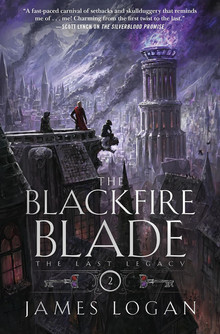 BEST OF 2025#14
The Blackfire Blade
 BEST OF 2025#15
Onyx Storm
 #16
#16The Three Lives of Cate Kay
 #17
#17The Death of Us
 #18
#18Sunrise on the Reaping
 #19
#19I Have Some Questions For You
 #20
#20The Boys in the Light
 #21
#21Scythe
 #22
#22Silver Elite
 #23
#23One Golden Summer
 #24
#24Great Big Beautiful Life
 #25
#25No More Tears
 #26
#26Haven't Killed in Years
 #27
#27