The Natural Order
The year is 2070, and tech visionary Paul Whitmore has developed a process to stop aging. For the past sixty-five years, he has followed his regimen (known as "the Method") to perfection, and on his 122nd birthday, he still looks like a man in his fifties. Now "Golden Day" is approaching—the moment Paul will officially break the record for the longest-lived human—and his company, Benetus, will release the Method to the public.
Paul leads an isolated existence. He is an extreme germaphobe, knowing any drop in his health could tank Benetus's stock price. His peers have all died, and the Method demands grueling discipline: morning meditation, a five-mile run, and a diet restricted entirely to nutrition shakes and water to keep his body in peak anti-aging balance.
Living in a compound north of San Francisco, Paul rarely leaves. Beyond his fear of germs, he faces constant threats from detractors who resent his perceived bastardization of the natural life cycle, most notably from a domestic terrorist group that calls themselves Natural Order. For twenty years, Natural Order has operated with a single goal: kill Paul Whitmore. On top of their own assassination attempts, they have placed a $100,000,000 bounty on his head, keeping Paul trapped on high alert.
With less than a year until Golden Day, Natural Order escalates the conflict. Through sheer happenstance, they discover Paul has an estranged son, Max, now an aging man in his seventies. Though Paul severed ties when Max was a boy, the threat is credible, and Paul will stop at nothing to save him. He sends his security team to retrieve Max, bringing him to the California compound, where the son's deep-seated hatred for his father is immediately apparent. Paul hopes to reconcile, but they have decades of emotional baggage to unpack. Meanwhile, Natural Order doubles its efforts to eliminate Paul before he can claim the record and release the Method worldwide.
While the premise is solid, the novel struggles with execution. For starters, it never clearly explains why the company waited decades to release the most monumental breakthrough in life-science history. Furthermore, the depiction of 2070 feels surprisingly indistinguishable from today. Beyond minor tweaks—such as autonomous electric vehicles replacing gas cars—the world feels static. Given the accelerating pace of technological evolution and AI, 2070 is unlikely to look this similar to the 2020s, nor would sixty years pass without another tech genius also arriving at the same anti-aging conclusion as Paul. Finally, the book suffers from an identity crisis: Is it high-concept sci-fi, an action thriller, or a heartfelt family drama? It tries to be all three, but unfortunately none of the arcs fully land.
I wanted to like this book, and while it kept my attention, it ultimately got bogged down by contrasting themes and uneven execution.

Thank you to Atria Books for providing an ARC via NetGalley in exchange for an honest review.
The experience of loving a book is not complete until you have turned around to someone and said, “You have got to read this.”Ann Patchett
Based on what I thought of this book, do you have one in mind I'd like? I love suggestions!
Keep going where this sits in the 2026 ranking
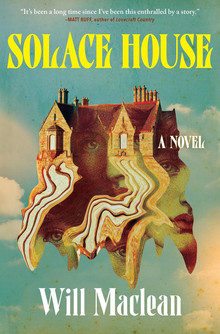 #47
Solace House
 #48
The Amateur
 #49
Broken Dove
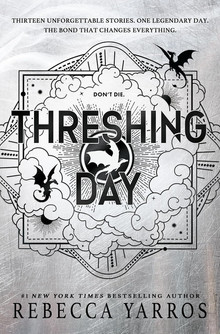 #50
Threshing Day
 #51
Meredith, Alone
 #52
The Ending Writes Itself
 #53
The Book Witch
 #54
The Natural Order
 #55
Under the Falls
 #56
Crux
 #57
Exit Party
 #58
This Book Made Me Think of You
 #59
The Adventures of Juan Planchard
 #60
The Things We Never Say
 #61