The Amateur
It's 1978, and teenager Mira Winston is the best golfer, male or female, at her country club in Tallmadge, New York, a posh suburb less than an hour from Manhattan. With an acceptance to Yale in hand, she is spending her final summer honing her golf game. Then, in an instant, her life changes. While hitting shots into a small practice net the club has in lieu of a driving range, Mira hits a ball that rips through the netting and strikes a young caddie, Kenny Foster, in the head. He's dead of a brain hemorrhage before the ambulance arrives.
It's a tragedy, but it's obviously an accident... right? Nevertheless, a seventeen-year-old boy is dead, and police and lawyers soon get involved. Details from Mira's past and present emerge that cast her in a less-than-flattering light. There's the time she took her "father's nine iron and smashed in the driver's-side window of the Ford Maverick in which a senior at the high school had tried to rape me." There's the time she crashed her mother's Camaro into a stop sign while stoned. And there's the fact that she's "fucking a married man my parents' age."
As these facts become known and she begins to lose in the court of public opinion, legal pressure also mounts. When it's revealed that the net was tampered with shortly before the accident—and that Mira was loudly advocating for the adjustment that was made—things begin to look a lot murkier for her future.
The novel explores several themes surrounding the accident and its legal fallout. The gender prejudices of the time are at the forefront, in concert with prevalent male-female power imbalances. There is Mira's guilt for having killed another person, albeit accidentally, and how she handles that trauma. There's also her penchant for dating (or really just "fucking," as she would put it) older men. Mira isn't a lovesick teenager—she's very aware of the situation and a willing participant—but her relationship also leads to an examination of society's reaction to it at the time. Mira is shamed for "breaking up a marriage" and is more to blame in her community's eyes than the forty-seven-year-old man who committed statutory rape.
It all makes for a complex character study. Mira says to the reader at one point, "I fear you don't like me," and truth be told, she's not terribly likable. "Well, if we wanted only likable characters in our novels and movies and plays, there'd be no Macbeth, Anna Karenina, Pulp Fiction, Sharp Objects, or The Talented Mr. Ripley," she counters. She was broken before the accident ("I remained confident that if I lived long enough, I just might acquire a taste for age-appropriate dick"), but Kenny's death and the societal backlash push her further into her grief, into drugs, and into her personal conviction that her role in Kenny's death was karmic payback for her having slept with Theo Catton.
Her lack of likability intentionally forces readers to examine how they might react if they had been living in Tallmadge at the time. Would they have defended Mira and believed in her innocence? Or would they have been swept up in a community that gathered its pitchforks and believed that a girl's moral shortcomings likely led to her culpability in the death of a fellow high school student? The novel drags at times, but that central tension and forced self-analysis were enough to bump it up into the four-star range for me. It's an interesting read, but also one that you could skip if it doesn't sound like your style.
The experience of loving a book is not complete until you have turned around to someone and said, “You have got to read this.”Ann Patchett
Based on what I thought of this book, do you have one in mind I'd like? I love suggestions!
Keep going where this sits in the 2026 ranking
 #43
#43When the Cranes Fly South
 #44
#44You With the Sad Eyes
 #45
#45The Left and the Lucky
 #46
#46Jane and Dan at the End of the World
 #47
#47Starside
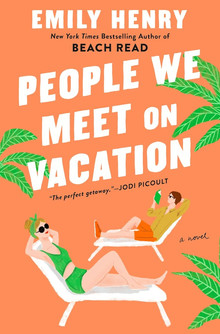 #48
#48People We Meet on Vacation
 #49
#49Last One Out
 #50
#50The Amateur
 #51
#51Sublimation
 #52
#52Read Your Mind
 #53
#53Broken Dove
 #54
#54Meredith, Alone
 #55
#55The Ending Writes Itself
 #56
#56The Song of the Blue Bottle Tree
 #57
#57