Amazon's Best Books of 2026
It's always an exciting day at Barlin's Books when the Amazon Editors release their favorite books of the year. That list, in some ways, was what initially gave rise to this site. It's an opportunity for me to compare my impressions with theirs, identify books I might have missed over the course of my reading year to target, as well as pick out surprises among their selections.
While Amazon and I were in pretty close lockstep in with their 2025 list, things are quite a bit shakier this year. Five didn't crack the top 100? Nor did Phoebe Berman's Gonna Lose It? And no Peck & Peck? Shameful! They also buried some of my favorites (The Pirate Queen, Under Story, Lady Tremaine) far too low on the list, while putting two of my three least favorite books in their Top 100.
Let's take a look at the Amazon rankings and see how they did vs. my 2026 rankings on Barlin's Books...

The story of the Koh family, who leave Korea in the late 1990s for Sydney and eventually settle in Southern California. There, they attempt to regain their footing by maintaining an unflappable belief that education will lead their children to success and stability.
The #1 ranking is just the latest in a long stream of buzz for this book. On my TBR shelf and one that I will knock out in the coming weeks.

In a fractured near-future world, a set of bizarre events at a party suggest that there may be a parallel universe, and potentially a path to reach it.
I read Under Story, Chloe Benjamin's brilliant take on an alternate universe narrative, just before I read this one, and so it was inevitable that I would measure Exit Party against it. Unfortunately, that comparison found Exit Party lacking. Mandel achieved broad success with her previous novels Station Eleven and Sea of Tranquility, and readers who enjoyed those titles will likely appreciate this latest descent into near-future speculative science fiction. Looking back at my ratings, however, I didn't love either of those earlier books. Despite that, I strangely held a positive association with Mandel's work.
I think Exit Party likely confirms that her writing is simply not for me. There is something about how Mandel shapes a story that leaves me unsatisfied. While she manages the ending here better than in her previous books, I was still underwhelmed. If you're in the mood for speculative science and exploration of alternate universes, I suggest you try Under Story instead.

After tackling schizophrenia in his 2020 book Hidden Valley Road, journalist Robert Kilker turns his attention to dementia, this time profiling a family with a genetic mutation that causes dementia as early as their forties.

Deep in rural Louisiana in 1941, a young mother is gunned down by her husband before he turns the weapon on himself. Elsewhere, a woman gives birth to a little girl, only to abandon her while the baby "was womb wet, having suckled just one time." Both mothers leave behind young daughters—Vernice and Annie—who are raised by their aunt and grandmother, respectively. Thrust together as "cradle friends" when their new caretakers need relief, the girls form an unbreakable, lifelong bond.
The novel offers a deep exploration of female friendship and the critical nature of mother-daughter bonds. This theme unfolds through the additional friendships and surrogate mother figures (and men) the young women encounter in their attempt to fill that void. Beneath this core focus, Tayari Jones examines the era's racial injustices, as well as the emerging Black upper class in the Deep South and the intra-community class tensions it created.
Amazon made Kin its Best Book of the Year So Far at the halfway point of the year, and now followed it up with a Top 5 finish. While it is quite good, it missed some of the magic I found in other books from that list that ranked higher on mine. The novel was satisfying, full of insightful commentary, packed with memorable similes, and featured a better-than-average plot. I came in with high expectations given the hype, and those expectations—more than anything the book did or didn't do—left me slightly underwhelmed. Kin still delivered on most of what I wanted out of the novel.
Recommended, but temper your expectations to avoid the tiniest pinch of disappointment that befell me.

Reading now! So far, so good. It's grittier than I was expecting, and at times darkly comic. The payoff will determine if this is something great or merely something good.

The author of Hamnet this time sets her tale in Ireland during the years before and after the Great Hunger, Land focuses on a father and his ten-year-old son who are working to map the land under Ordnance Survey project, only to be sent off course by an unsettling discovery.

A gripping and fascinating piece of investigative journalism that seeks to uncover the truth behind the mysterious death of a young London man, Zac Brettler, in 2019.
Patrick Radden Keefe is best known for his 2021 book Empire of Pain about the Sackler family and the opoid crisis in America. The author applies the same journalistic tenacity when tracking down all angles in play with Zac's death. There are consistent surprises throughout the book, and Radden Keefe gradually and expertly reveals layer upon layer of secrets that brought all of the parties involved to the luxury apartment in Riverwalk on the night in question. There are far more components to the suicidal plunge than one might imagine.
There were a few small nits, but it's a book I'd strongly recommend for fans of non-fiction that reads like a crime novel.

The follow-up to Big Little Lies once again traces the actions of Madeline, Celeste, Jane, Renata, and Bonnie, who are now ten years older with highschoolers instead of kindergarteners. Will their secrets be exposed after all this time?

The much-anticipated memoir from the Wall Street Journal reporter who was wrongly imprisoned in Putin’s Russia for more than a year—a glimpse inside the perils and contradictions of a country in the midst of autocracy.

The conclusion to Whitehead's series that began with The Harlem Shuffle, which I thought was good...just not good enough to continue the series.

From the author of Ask Again, Yes comes this multi-generational novel that begins in Ireland in the 1960s and spans decades as it follows eleven brothers on their varied paths in the wake of a family tragedy.
I've been hearing lots of good things about this one; it's near the top of my TBR.

An English literature professor pens a novel about two women who run a domestic violence shelter in coastal Maine, which loosely plays out her own affair with a female colleague. When the writing becomes difficult after the early onset of Alzheimer’s, her husband finds the manuscript and extrapolates her affair from the writing within. Filled with a mix of anger and envy, he rewrites the novel and publishes it as his own, to wide acclaim, before feelings of guilt force him to confess to an unlikely party who he's certain will never reveal his secret...until they do.
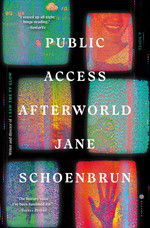
Amazon's top book of November lands at #13, and it sounds like a good one. A mesmerizing mash-up of speculative fiction, horror, and conspiracy, it's one best experienced without preconceived notions. What is Public Access Afterworld? You'll just have to read it to find out!

A novelist and the critic whose scathing review led to a viral feud slowly discover a genuine connection in this emotionally authentic enemies-to-friends-to-lovers story.
I get the hype! In a genre that too often thrives on slight tweaks to traditional tropes, Bad Words does something different. While it follows an enemies-to-lovers arc, it is anchored in an authentic emotional connection that sets it apart. There are layers to what draws Parker and Selina together: a reluctant physical attraction, surprising shared interests, and differences that bring them closer rather than push them apart. Each slowly and privately rationalizes their feelings for the other, and by the time they realize their connection, you are thoroughly invested in their happiness.
The core debate at the heart of the story over literary criticism—particularly the ethics and necessity of negative reviews—hit home for me as someone who reviews every book I read. I could relate to Selina, who takes no pleasure in cruelty but firmly believes that if praise is handed out universally, criticism becomes meaningless. At the same time, literary criticism is inherently subjective, even at the professional level, and Parker's anger at the personal cost of such brutal honesty feels completely justified.
There was no need for me to channel my inner Selina Chan here—Bad Words is really good. I was hooked from the opening pages and devoured it straight through to its satisfying conclusion. The hype is well-earned, and it is definitely worth picking up.

A woman's memoir about the abrupt dissolution of her marriage near the start of the pandemic, this sounds extremely reminiscent of 2025's Awake by Jen Hatmaker. Interestingly, the Amazon editors rated Awake their #7 book of 2025, so they must truly be drawn to this type of story. I didn't care for Awake, and so I can't imagine that I'll be picking up this similar story.

A young man returns to his home on an island off the western coast of Scotland in this novel about identity and secrets within the characters and their community.
This is one that I'm sure I will eventually get to, but it doesn't have me clamoring to immerse myself in that story as much as others.

Perhaps the most polarizing book of 2026, a tradwife influencer’s idyllic life is upended when she wakes up one day and it's mysteriously 1855.
I found the entirety of it fascinating. There are plenty of "wait...did she just say that?" moments, and I laughed out loud several times. Burke's ability to juxtapose Natalie's inner monologue with her distinctly different outward actions helped unlock the true essence of the character. There is an underlying mystery—how did Natalie end up in 1855, and what could unlock her return? While we're trying to figure that out, there are tiny moments that make Natalie think that maybe this is some sort of warped modern reality TV show, her own version of The Truman Show. Maybe she isn't actually in 1855? But when things cross lines no reality show ever would, she turns her attention to trying to find a way back to the future.
Readers will be invested one way or another, either rooting for Natalie to overcome her situation, or cheering for her to get what's coming to her. It's thought-provoking, entertaining, and it lived up to the hype for me. It's well worth reading.

In 1988, eight men in Kingston, Jamaica, begin rehearsals for a play. Though strangers to one another, they share an inescapable truth: All of them are gay. And they live in a world that refuses to accept them.
One night the men are savagely beaten and one of them is killed. As their bodies heal, the survivors begin to face the hatred and contempt that the violence laid bare. Some try to ignore what happened. Others double down on retribution. Some disappear completely.

Based on a true story, The Nightingales is a graphic novel about a life-changing friendship between a seventeen-year-old girl and the dying stranger who moves into her family’s home.

A coming-of-age novel set at an elite boarding that focuses as much on class, race, and outsider status as it does on the central murder mystery.
While other books have more authentically captured the battle between insecurity and endless possibility that is waged during adolescence, Night Objects does a more than capable job. Lenny, reflecting back years later, says "Those were the moments that now make me miss being a teenager, when my edges were so amorphous it felt like I was bleeding into other people." What the friendships might lack in some level of authenticity and depth is mostly a product of the environment in which they exist.
The mystery in the novel isn't elite, but the surrounding components—the setting at Blanchard, Lenny's relationship with her stepdad, and the underlying racial and socioeconomic commentary—help to buoy the novel beyond its plot. The framing for the story is informed by Raphael's own life; like Lenny, she moved from Miami to Port Angeles as a teen, and while Blanchard and the Pascalianum Club are made up, the feelings of being an outsider in an elite world were directly drawn from Raphael's time attending Dartmouth as a work-study student. It's perhaps why that portion feels most authentic amidst a school full of false fronts.
An off-putting book for some (it's only tracking at around a 3.5 rating on Goodreads), I thought it was a more layered offering with enough positives to outweigh any clunky bits. Worth a read.
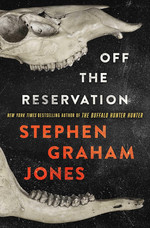

If you haven't read The Calamity Club by now, you're probably in the minority. Certianly one of the buzziest books of the year, and while it's not elite, it's still very good.
Set in Oxford, Mississippi in 1933, a loyal sister and a sassy orphan girl headline a female-driven cast that author Kathryn Stockett uses to expose a number of customs, beliefs, and laws of the time that, by today's standards, seem unthinkable.
The novel is long, clocking in at 640 pages, and it is deliberately paced. Stockett heavily foreshadows the majority of the events in the novel so there are few surprises. Despite the length, the end of the novel came fairly abruptly, but Stockett ties up loose ends effectively in a story that will leave most readers satisfied. For those that prefer listening to books, the audiobook is especially well done for this one, although listening at something faster than 1x speed is a must. The slow southern drawl of both Birdie and Meg turns the 640 pages into a nearly thirty-hour performance.
It seems shocking that it's been seventeen years since Stockett won readers' hearts with her 2009 novel The Help, and I predict The Calamity Club will have a similar effect. It's one that everyone will be talking about, and it's worth a read (or listen) before the inevitable movie is made.

Malcolm Gladwell applies his signature approach to analyzing complex problems to America's unique problem with gun violence. No other country has more gun deaths than America—why?
Gladwell's thesis doesn't spare anyone embroiled in the debate over gun control, castigating all involved for the path they've taken. The pedantic (and in some cases willfully ignorant) approach taken by all parties (including the Supreme Court) to analyzing the issue has obliterated any clear path to a solution. Gladwell lays out compelling data to support his position, and as in his other books, he is hard to argue with. The result is a step-by-step undoing of several beliefs likely held by many Americans.
My only knock is that the book is essentially compiled transcripts from Gladwell's podcast Revisionist History, and so if you've already listened there, there's no real reason to pick this up. Otherwise, I think this is an essential read for any American.





I was not expecting to see this show up on this list, and certainly not as high as it is.
The French Illusion opens with Paul and Chelsea Tanner enjoying an idyllic honeymoon—one planned down to the second and shared broadly on social media by the bride. On their fifth day of vacation bliss, they embark on a long day trip to the beaches of Normandy. Everything is going according to plan... until it isn't. Paul and Chelsea are abducted in an elaborate and sophisticated operation, and the pair are individually ransomed to their respective families.
The story's point of view bounces between the captured couple and their families, showing how each group handles the stress and terror of the situation. This is also where things start to fall apart for me. Whether it's Chelsea's parents immediately ceding control and decision-making to their 24-year-old son, a college student and bartender, or the CIA's absurd plan to bring the couple back, the lack of logic and unconvincing dialogue is pretty brutal.
I wanted to like this one a lot, but for a book penned as an homage to John le Carré's great spy novels, it has major plot holes that le Carré would never have tolerated. Furthermore, the pacing is off, to the point that I was legitimately convinced this was all setup for a cliffhanger that would only be resolved in a sequel. Thankfully, this is a standalone novel that concludes the story.

Two actors with an undeniable connection explore a relentless on-again, off-again romance in this spicy, love-it-or-hate-it read built for the theater crowd. It's a friends-to-lovers story (with some enemies-to-lovers built in), and while there's plenty of theater and improv, the true heart of the story is AJ and Noah’s connection: a chaotic, intensely real bond that is as captivating as it is infuriating.
It's a confounding book. Parts of it are truly excellent, while others are dull, repetitive, or outright frustrating. Some additional drama added on top of the main story felt unnecessary, and there are only so many times a reader can be emotionally jerked around. Ultimately, the non-stop ping-pong between the main pair will test the patience of even the most invested reader. That endless cycle, more than anything else, makes this a polarizing read—and one I struggled to rate. In the end, I'll remember the good parts more than the bad, but its flaws keep it short of five stars.

A career conman, Paul Skalnik, traded fake jailhouse confessions for lighter sentences, sending multiple men to death row on his word.
This worked thirty or more times—a figure Skalnik would brag about whenever he found himself back in jail, offering his services to law enforcement. One such case was the capital murder trial for the killing of Shelly Boggio. That case, along with the aftermath of a wrongful conviction, serves as the central focus of Pamela Colloff's investigative work, Catch the Devil.
Hearing about Skalnik's transgressions, one can't help but think of Frank Abagnale Jr., whose antics were portrayed in Catch Me If You Can. Unlike the Hollywood version of Abagnale, the real-life crook spent most of his teen years in jail for some of the same crimes Skalnik committed. But where Abagnale stopped at thievery, Skalnik went much deeper and darker into truly heinous territory. Yet members of the legal community shrugged off their association with him, insisting they believed Skalnik had reliable information—or sheepishly rationalizing, "You have to make a deal with some sinners if you're going to catch the devil."
Catch the Devil is high-quality investigative journalism that delves deep into both Skalnik's checkered life and the flaw-ridden Boggio trial. Skalnik's utter lack of morals and manipulation of the system will infuriate readers, as will the systemic failures of the U.S. legal system laid bare throughout the text. It is well worth the read.

#32? Come on, Amazon! The Pirate Queen is currently my favorite book of 2026, and there's a very solid chance it holds on to that spot permanently.
It's been nearly 500 years since Gráinne Ní Mháille—anglicized as Grace O'Malley—was born. Most documented details of her life have been lost to time, a consequence of the centuries that have passed, the male-dominated culture of her era, and the old adage that "history is written by the victors". Yet tales of her legendary exploits have been passed down through generations of Irish and preserved as legend. In The Pirate Queen, Ariel Lawhon takes the facts we do know, blends them with folklore, and reimagines large swaths of Grace's story to create one of the most compelling historical novels in recent memory.
Lawhon crafts her tale across three interlocking timelines—"Maiden" (1535–1546), "Mother" (1550–1583), and "Matriarch" (1586–1603)—a nod to the Celtic Trinity Knot symbolizing the three stages of womanhood. Rather than presenting Grace's life chronologically, the novel cycles through a different timeline in each chapter. Chapter one introduces five-year-old Grace; chapter two jumps to 1550 with Grace as a young wife; chapter three leaps to 1586, where she is fully established as the "Pirate Queen"; and chapter four loops back to the "Maiden" line. It's an interesting device, that initially creates some confusion but ultimately adds richness to the telling of the tale. Lawhon masterfully aligns key moments across eras, helping readers directly connect the formative events of Grace's youth to her later decisions. In a purely chronological retelling spanning fifty years, readers might forget crucial details, but Lawhon's inventive structure does the heavy lifting for us.
The Pirate Queen has bits of everything: heroes and villains, romance and tragedy, humor and despair. It is more action-packed than I initially expected, and the story is reminiscent of Braveheart, if William Wallace were Irish, and a sea captain, and a badass woman. And it's really good. While the tall tales of Grace's legendary life provided a great framework, this shows Lawhon operating on another level from what I saw in The Frozen River (which was in my Top 20 of 2024, by the way); I can't overstate how well she builds a complete story around that unique life. This is one I will be universally recommending for years to come.

Jake Deal is a "nightcrawler", trolling the streets of Los Angeles on a nightly basis, one ear tuned to his police scanner to hopefully catch criminal activity as its happening so that he can live stream it to his audience.
Doug Gibson is a street lawyer, representing those in Los Angeles on the wrong side of a judicial system skewed to favor the white and the rich.
Kara Delgado is a private concierge for a service called Sub Rosa, which caters to the uber wealthy, acquiring everything from drugs to women to experiences for those for whom price is no object.
When the novel opens, there is nothing that should connect the three. However, Los Angeles is being tormented by a modern-day serial killer, colloquially referred to as the "LA Ripper", and a series of unconnected events cause Jake, Doug, and Kara to each begin to piece together bits of information about the Ripper. They individually begin to home in on potential connections between the Ripper's murders, and eventually their research and conclusions start to lead them to each other.
A few small nits—and, frankly, the level of violence: this is among the grisliest novels I read this year—will keep me from recommending this universally, but it was a quality read that I devoured (perhaps not my best word choice...iykyk) in a few days. If you're in the mood for an edgy exploration of the dark side of Los Angeles, this will satisfy; just make sure you read it on an empty stomach.


A tragic accident on a remote sheep station in 1958 eventually leads to a dark family secret in this character-driven exploration of duty and psyche set in the Australian Outback.
The story seems to be one that will center on perseverance in the face of tragedy, and it is; but the accident in the opening pages is not the end of the tragedies that will befall the MacBrides. What eventually takes center stage is an immense secret that is revealed later in the novel, one that will influence dozens of future choices. It's an eyebrow-raising unexpected turn in a direction most readers will not anticipate.
This is mostly an exploration of a family and the seminal moments that impact the course of their lives; a look-in and a dissection of psyches more than a novel that follows a plot-driven journey. In that respect, it reminded me quite a bit of Buckeye, Amazon's top book of 2025 and a novel that I found enjoyable, although not one that rose to the same level of distinction in my rankings last year.


I'm so happy to see this one make the list!
Dolly Brick is a single mother, a kindergarten teacher, and someone who has taken on an inordinate amount of responsibility ever since her mother left when she was just a girl. When a fire at their family home means Dolly is destined to spend the summer in Rhode Island and also needs to find a way to come up with $50,000, all the pieces are in place for an unlikely summer romance.
In a Pretty Woman-esque setup, the town's wealthiest eligible bachelor needs someone to pretend to be his date—purely platonically—for the summer, and he's willing to pay Dolly handsomely for her time. What could possibly happen? Well, we know what's going to happen, but the path author Annabel Monaghan takes us on as the two grow closer is really well executed. It's just the right amount of awkward and sweet and genuine that it had me hooked early. Dolly is insecure, and has never asked for anything in her life. Stewart feels the weight of the world on his shoulders with work, and he has his own insecurities about his ability to lead the family business. They're both oldest children, and they both have an innate sense of responsibility they carry in all they do. They're also both selfless to a fault and just the right amount of awkwardly funny to create plenty of chuckle moments.
My only previous experience reading Monaghan was 2024's Summer Romance, which was cute and grew on me over time. But Dolly All the Time is significantly better in my opinion. The love match feels more natural (I still struggle to believe that a 39-year-old mother of three would find skateboarding sexy in Summer Romance), and while Stewart is more than a little too good to be true (gorgeous, filthy rich, great with kids, earnest and selfless and thoughtful and honest...), it all comes together naturally. Like any good romance, there of course will be a moment where poor decisions or poor communication threaten the relationship, but the inevitable conflict is believable enough to not feel overly manufactured. The result is a sweet, touching love story that will plaster a smile on your face.

A nonfiction account of four men struggling for various reasons, including coming to terms with sexuality, dealing with childhood trauma, and living as a Black trans man in a rural red state.
I'm not terribly excited by that description, and when the promotional blurb says, "They are half the population. And yet when mentioned as a bloc, it’s often to ask the question: What’s wrong with them?", I'm not inclined to pick up something that pushes that narrative. This will likely be a pass for Barlin's Books.


I will get to this one. I think I'm just saving it for the right slow-burn moment. It feels like a good winter read, and I'm excited to see how Cal Hooper's trilogy ends.


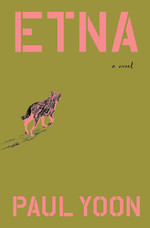


I was certain this would make the list; I'm also fairly shocked it's not higher.
Daphne Fuller is enjoying a pleasant afternoon at the Met with her husband, Jonathan, when an older man begins surreptitiously following them. Before long, Jonathan confronts the man, and a tense situation quickly dissolves into laughter and surprise: the man is Eddie Triplett, Daphne's former stepfather, and someone she hasn't seen or spoken to in over forty years.
The novel is light on plot but long on memorable connections and astute observations about life in general. I've enjoyed Patchett's previous novels, but compared to those, I believe she's at her best in this one. It's a loving portrayal of father-daughter bonds, complicated family dynamics, and the way a singular event can alter the path of one's life. It's filled with warmth and a purity of spirit that will leave readers smiling. If you're looking for a story dripping with authentically rendered characters and interactions, you will not be disappointed.




A 36-year-old navigates weight issues and divorce as she reclaims her identity from the comic character she inspired in this latest adult novel from Rainbow Rowell. It's an unflinching look at a character you can't help but root for.

Under Story opens with our protagonist, Laurel Salter, en route to Antarctica in 2016. Her life is shattered—her marriage has ended, and there is a tragedy that is hinted at that was the cause of the dissolution. Laurel is a scientist by trade, but in Antarctica, she works simply as a kitchen steward supporting the on-site research teams.
Shortly before her arrival, a glowing dome known as "the Arc" appeared on the horizon. Tests on the Arc yield staggering conclusions regarding particle physics and the world of dark matter. And if they are correct, the physics of the Arc may prove a universe where time runs backward — and offer Laurel a way to undo her own past.
There is so much packed into this novel. It approaches time travel in a way I have never read before, operating at a level of complexity that makes an intrinsically tricky subject even more mind-bending. Chloe Benjamin puts immense thought (and plenty of layman-accessible science) behind the mechanics and execution, while sprinkling in dozens of tongue-in-cheek moments to remind us not to get bogged down in the details and simply go along for the ride.
And it's so good. It is confusing at times, as a story that moves in two directions naturally could be, but it's smart and heartfelt and as buttoned-up as I needed something this speculative to be. It will make you think on several levels, and it will likely have you pondering portions of the book for weeks or months to come.
In a year full of strong releases, Under Story sets a new standard. Its creativity is off the charts, the plotting is meticulous, and the emotional weight of the story is brilliantly handled. Quite simply, it's one of the best books I read all year.

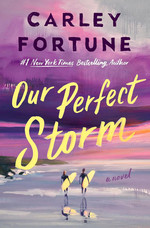
When a woman's fiancé leaves her on their wedding day, she ends up taking her lifelong (gorgeous, heterosexual) male best friend on her honeymoon. What could possibly happen?
There's little mystery to what's coming in this one. The primary conundrum is "what took these two so long to act on what was obvious to everyone and to them?" And that's where the book falls just a bit short. These are no ordinary friends; they have been joined at the hip since age nine. They have lived together. They know what the other is thinking (allegedly). They finish each other's sentences. They're both each other's favorite person. And they're both wildly attracted to the other physically. There is, of course, the age-old trope of not wishing to put their friendship at risk, and perhaps one could accept that their belief is so powerful that they would never explore a relationship before this point. But like with People We Meet on Vacation, it needed something more to reinforce why they'd avoided their mutual attraction for so long.
Frankie can be more than a little difficult and unwittingly callous at times, but George is as patient as flawless as leading men come. His saintly devotion is tested more than once, but we all know how this one must end up, right? Aside from the insufficiently explained reasons for their reluctance, it's a touching love story of two best friends finally coming to their senses. Satisfying, despite its minor flaws.

Two high school friends use rock climbing to try to escape a seemingly predetermined future in this emotionally heavy character study from Gabriel Tallent.
Crux follows the pair during their final year of high school as they try to navigate lives that feel predetermined on paths neither wants to embark. Despite his academic talent, Dan has no interest in attending college. Tamma wants nothing more to leave behind her downtrodden life, but all signs point to her never being able to escape. Nevertheless, she possesses a boundless energy and positivity, to go with an x-rated mouth and bravado for days. As Dan puts it, "He loved everything about her. Everything about her was dear to him. This girl: graceless, frolicsome, and indestructible, like you'd imagine a newborn moose might be. She was just full of hope. Her hope was a thing you could feel."
This isn't a romance, though. Tamma is a lesbian—at least she thinks she is—and she has no romantic interest in Dan, nor he in her. They are each other's rock in their turbulent lives, lives that get even more topsy-turvy over the course of the book.
Despite Tamma's indefatigable energy and positivity, Crux is more of a downer than not. It's an interesting deep dive character study, and it evoked memories of movies like Sling Blade or even Napoleon Dynamite — a rural setting, a depressing home life, and characters just trying to persevere.
It's engaging, and sad, and interesting, but I didn't love it. It's a better-than-average character study, but with gaps that prevented me from fully connecting to the characters and the novel as a whole.


It's 1978, and teenager Mira Winston is the best golfer, male or female, at her country club in Tallmadge, New York, a posh suburb less than an hour from Manhattan. With an acceptance to Yale in hand, she is spending her final summer honing her golf game. Then, in an instant, her life changes. While hitting shots into a small practice net the club has in lieu of a driving range, Mira hits a ball that rips through the netting and strikes a young caddie, Kenny Foster, in the head. He's dead of a brain hemorrhage before the ambulance arrives.
The novel explores several themes surrounding the accident and its legal fallout. The gender prejudices of the time are at the forefront, in concert with prevalent male-female power imbalances. There is Mira's guilt for having killed another person, albeit accidentally, and how she handles that trauma. There's also her penchant for dating (or really just "f*cking," as she would put it) older men. Mira isn't a lovesick teenager—she's very aware of the situation and a willing participant—but her relationship also leads to an examination of society's reaction to it at the time. Mira is shamed for "breaking up a marriage" and is more to blame in her community's eyes than the forty-seven-year-old man who committed statutory rape.
It all makes for a complex character study. Mira says to the reader at one point, "I fear you don't like me," and truth be told, she's not terribly likable. However, her lack of likability intentionally forces readers to examine how they might react if they had been living in Tallmadge at the time. Would they have defended Mira and believed in her innocence? Or would they have been swept up in a community that gathered its pitchforks and believed that a girl's moral shortcomings likely led to her culpability in the death of a fellow high school student? The novel drags at times, but that central tension and forced self-analysis were enough to bump it up a few quarter stars for me. It's an interesting read, but also one that you could skip if it doesn't sound like your style.


Way too low for this one! It's great, and there are still days where I think it might be my favorite book of the year. A brilliant retelling of Cinderella from the "wicked" stepmother's perspective, this witty, inventive historical drama completely reimagines a classic villain.
Lady Etheldreda Tremaine Bramley is a fiercely determined single mother, twice widowed and left with a crumbling manor and only a whisper of titled standing. She's not above secretly traipsing through the woods to hunt with her falcon, Lucy, but also takes pains to keep up appearances of the privileged class and her perceived societal standing. Like most mothers, she is driven by a burning desire to see safety and happiness for her two daughters. In the times in which she lives, that means finding a suitable spousal match for them, despite their lack of dowry and their limited societal station.
Opportunity for societal elevation presents itself with the famed ball, of course, in which the kingdom's prince seeks to meet an eligible bachelorette. Where that event is central to the 1950 Disney film (along with an inordinate amount of time devoted to literal cat-and-mouse hijinks), the ball consumes far less of the plot in Lady Tremaine. Instead, we spend more time learning of Ethel's childhood, her girlhood rivalry over her first love, and her pathway to a second marriage and inheriting an unenthused stepdaughter. We also come to explore the aftermath of the ball in far more detail than in any other rendering of this story, and it is in those pages in which Lady Tremaine truly starts to shine. The plot thickens, the intrigue builds, and the story takes some captivating turns.
It's an artfully told tale, recasting a story you think you know as a historical drama and imbuing it with clever dialogue, an inventive plot, and a fiercely determined main character. It had me chuckling frequently at the banter; the characters conduct themselves with the propriety of the times, but underneath the surface lies a delicious layer of a razor-sharp wit.
When I started Lady Tremaine, I had no expectations that this would be a book that would land near the top of my favorites, and this inventive expansion of a fairy tale we know had just the right amount of everything to be one of my favorite books of 2026. Highly recommended.




Somebody at Amazon truly loves this book, because almost no one else does. It's currently sitting at 3.33 on Goodreads and near the very bottom on Barlin's Books.
Homebound opens in 1983, with a focus on an angsty young woman, Becks, dealing with family issues and the recent death of her uncle. Then, in Chapter 2, it fast-forwards to 2586, on a boat somewhere in the Atlantic Ocean. There we meet Yeshiko and Root, who navigate a planet Earth that's now mostly submerged beneath the seas in something reminiscent of Waterworld. We know Becks is a burgeoning computer programmer, dabbling around with BASIC. We have no idea how the stories could be connected.
Despite the 600-year gap in timelines, I thought the novel started off strong. Yeshiko and Root were compelling, and their pathway to carving out survival through salvage set a strong foundation. When they pick up mysterious passengers after a stop at a rough-and-tumble floating city, I was interested and optimistic. Similarly, Becks' gradual discovery of a program her uncle was working on before his untimely death also seemed to open to the door to something that could be really interesting. I became hopeful that this could be a tightly crafted tale that gradually revealed an unlikely connection across hundreds of years, akin to Cloud Cuckoo Land.
I should have tempered my expectations. While we eventually pick up a third storyline, told through a series of email correspondence in the 2070s and 2080s that builds some bridge between everything, the result is, to put it lightly, disappointing. I wanted a grand reveal that pulled it all together in an a-ha moment, but when I finished, I literally said out loud, "That's it?". From such a promising start, it sputtered to a wholly unsatisfying conclusion.


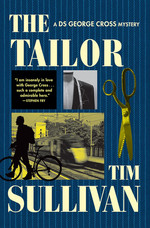


Detective Chelsey Calhoun debuted in Emiko Jean's 2024 novel The Return of Ellie Black, which ended up being one of the better thrillers I read that year. Before You Were Anne continues Calhoun's story, once again revolving around missing girls—a personal and professional crusade of hers.
It should be noted that while Before You Were Anne is classified as the second book in the series, it easily works as a standalone novel. While it spoils some of the key reveals from The Return of Ellie Black, you don't need to have read the first book to follow the events here.
Calhoun and her partner, Ryan Montoya, are called to a crime scene disturbingly close to Chelsey's home. A woman lies dead from multiple stab wounds, and her sixteen-year-old daughter is missing. Like Calhoun, the victim is of Japanese descent; between that shared background and the missing girl, Calhoun feels an immediate attachment to the case.
As with The Return of Ellie Black, Jean integrates broader social themes alongside the central mystery. The immigrant experience and societal prejudice once again form a persistent backbone to the story. This time, the narrative ventures into the grim reality of human trafficking, paired with a sizable dose of domestic abuse. These topics are presented unflinchingly, lending weight and gravitas to an otherwise straightforward mystery.
Ultimately, Before You Were Anne is a better-than-average entry in the genre. While it might not be distinct enough to have its praises shouted from the rooftops, it remains a thoroughly satisfying mystery that thoughtfully incorporates Japanese culture while expanding Chelsey Calhoun's backstory. If you liked The Return of Ellie Black, you'll certainly like this one as well.


I swiftly plowed through the first book in the North Falls series earlier this year, and it was perhaps my favorite thriller I read this calendar year. I'm saving this one for the right moment, but I'm excited to continue what as an excellent start to the series.

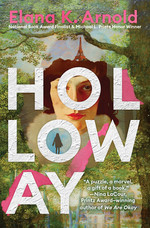


One half of a famous podcasting duo goes missing in this unique debut that artfully blends a missing persons case with a will-they-or-won't-they romance.
What we're left with is a genre-bending mashup of mystery and romance—"romanstery" perhaps?—where you have elements of both genres in nearly equal measure. We have the active investigation trying to locate Joy interspersed with the historical meet-cute and "why won't they just get together already!" pseudo-romantic sections of the book. It's a different combo, but in this scenario it really works, and the sweetness of the friendship between Benny and Joy helps to amplify the tension as the hours and days accumulate without any sign of Joy.
The mystery is better than average, and the connection Crum builds between two characters who just clearly are each other's "person" is top-notch. It's a propulsive read you'll likely finish in a few sittings. I'm a little surprised to see this one buried in the 90s; I expected this darling of a story would pop up on a lot of favorites lists this year.
Recommended for anyone who likes mysteries or romance novels, and certainly for readers (like me!) who enjoy both.




One email on the first of every month with a summary and rating of each book reviewed over the past 30 days, and a look at where the year's ranking stands.